
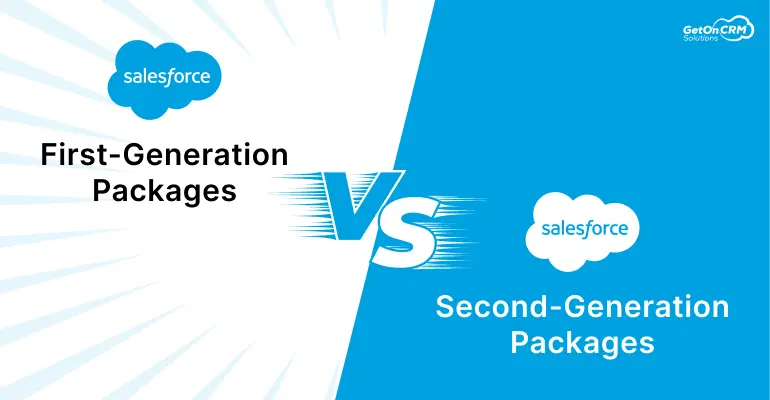
Managing software for the Salesforce ecosystem often feels like keeping a high-performance rhythm section in sync: one misstep and the whole track gets distorted. For decades, many ISVs and enterprise developers relied on the classic “First-Generation Managed Package” (1GP) model — but the cadence has changed.
Today, if you want releases that hit hard without missing a beat, you’re looking at the newer “Second-Generation Managed Package” (2GP) framework. The shift isn’t just about packaging — it’s a full-on upgrade to how your teams collaborate, automate, and deliver value.
What Are First-Generation Managed Packages (1GP)?
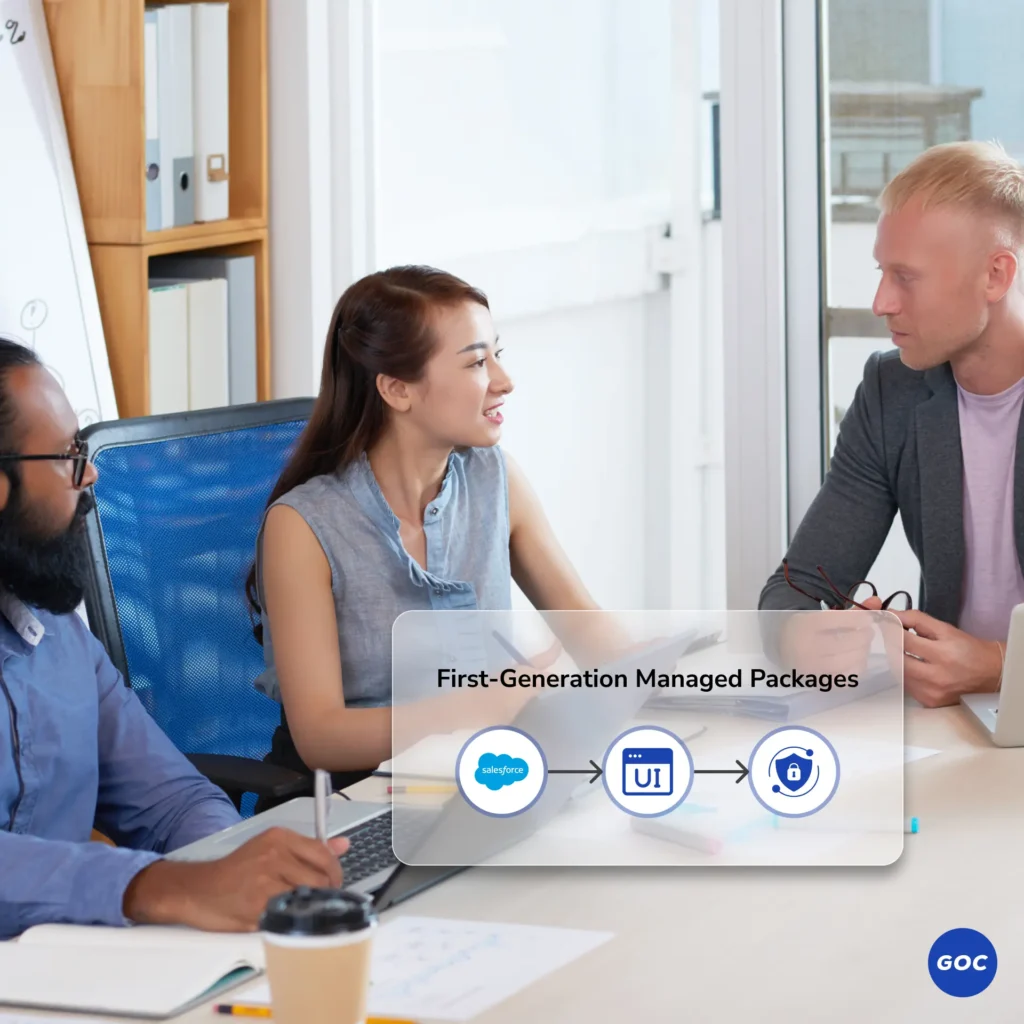
Under 1GP, packaging is tied to a dedicated packaging org (developer edition or partner org). You create a managed package in that org, assign a namespace, and release versions via the UI and packaging orgs.
Why it mattered: It enabled ISVs to deliver apps via AppExchange, protect intellectual property (locked Apex), apply upgrades and versioning under one namespace.
Key limitations in 1GP – First-Generation Managed Packages :
Version control and source-tracking are weak (changes live in packaging org rather than version control).
Dependencies between packages are limited and manual.
Upgrades and patching are more rigid, and managing large modular apps with 1GP becomes cumbersome.
“Maintaining a proper application lifecycle with first-generation packaging is very challenging.” In short: for smaller apps, 1GP might still work, but as ISVs scale, the friction appears.
What Are Second-Generation Managed Packages (2GP)?
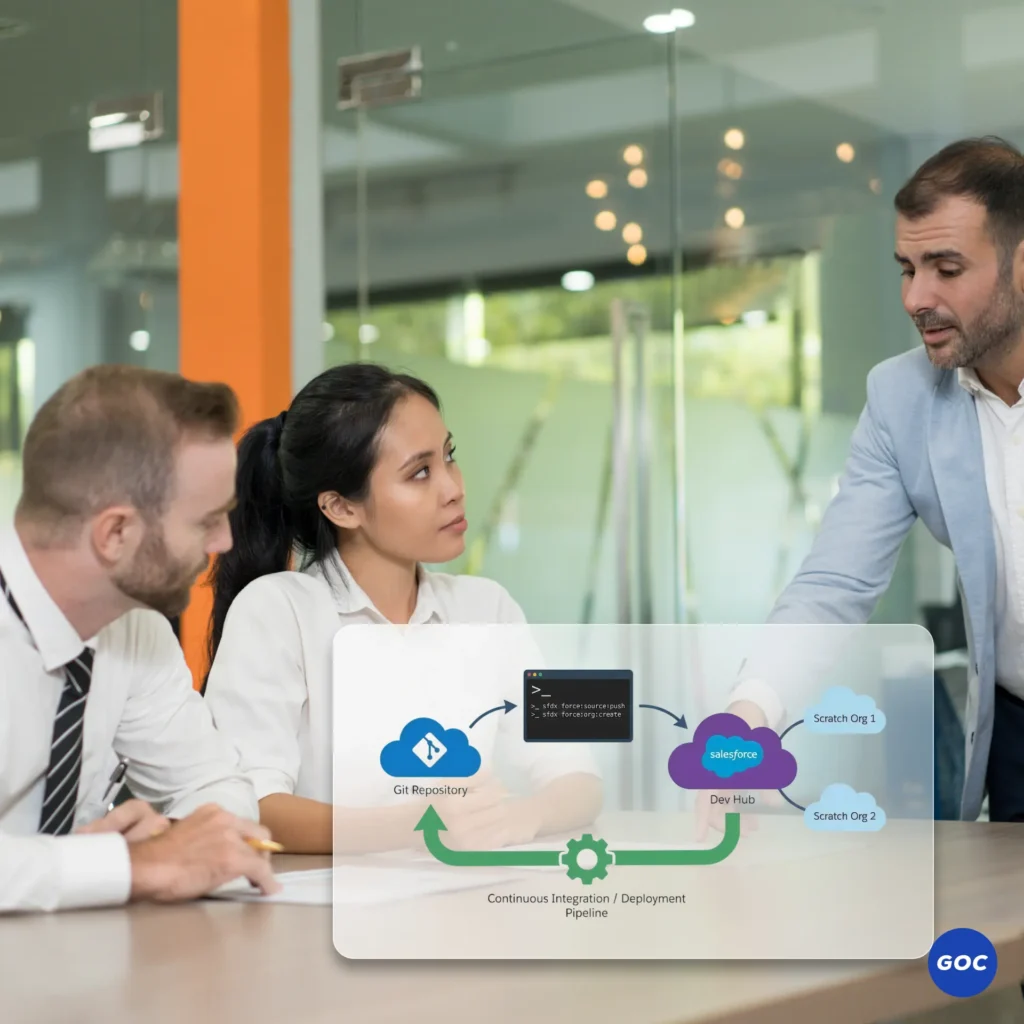
2GP is the newer packaging model designed to support source-driven development (via Git), CLI tooling (Salesforce CLI), Dev Hub + scratch orgs, modular packaging, and better dependency management.
Why Second-Generation Managed Packages matters
2GP aligns with contemporary DevOps and CI/CD pipelines. Salesforce says: “Second-generation managed packaging (managed 2GP) ushers in a new way for AppExchange partners to develop, distribute, and manage their apps and metadata.”
Advantages of adopting Second-Generation Managed Packages (2GP) include:
Source is the version-control system (Git), not just a packaging org.
Multiple packages can share the same namespace (so code sharing and modular design become easier).
Dependencies are explicitly declared, enabling modularization of features or services.
CLI and automation (sf/sfdx commands) streamline package versioning, promotion, install/uninstall flows.
Caveats: Legacy 1GP packages cannot be directly migrated to 2GP—there are no special tools for it, only a defined migration process that must be followed carefully.
Key Differences: 1GP vs 2GP — Salesforce Packaging Comparison
| Feature | First-Generation (1GP) | Second-Generation (2GP) |
|---|---|---|
| Packaging Org / Tool | Dedicated packaging org via UI | Dev Hub + CLI (sfdx/sf) |
| Source/Version Control | Manual, packaging org is the source | Git/source-driven |
| Namespace usage | One namespace per package, tightly bound | Shared namespace across multiple packages is supported |
| Dependency management | Manual, limited dependency support | Explicit, automated dependencies supported |
| Modular architecture | Monolithic packages by default | Enables modular/small packages with dependencies |
| CI/CD and automation | Harder to automate | Built-for modern DevOps |
| Upgrade/patching | More rigid, limited component removal | Better upgrade flexibility, cleaner component removal (with conditions) |
| Ideal use case | Smaller apps, legacy ISVs | Scalable ISV apps, large orgs, modern dev practices |
These differences highlight why many ISVs and enterprise teams are adopting 2GP to future-proof their packaging strategy.
Why Developers and ISVs Are Migrating to 2GP
There are compelling reasons why an ISV or enterprise team working on Salesforce apps should consider moving from 1GP to 2GP: For ongoing optimization, monitoring, and deployment support, many ISVs rely on Salesforce Managed Services.
to maintain and scale their apps efficiently.
Faster release cycles –Automated, CLI-driven deployments enable faster releases without relying on org-specific metadata.
Better collaboration – With Git source of truth, teams can branch, merge, and audit changes easily.
Scalability – Modular packages mean you can build core functionality and add plug-in modules or feature packages rather than one huge monolith.
Maintainability – Removing unused components, clearer dependency chains, and cleaner versioning reduces long-term maintenance cost.
According to smartitstaff blog: “As your app evolves, 2GP makes versioning and updates easier, helping future-proof your development.”
Move your Salesforce package to 2GP confidently
Best Practices for Transitioning from 1GP to 2GP
If you’re planning to make the move, keep these best practices in mind:
Audit your existing 1GP Packages: Review namespaces, dependencies, metadata types used and subscriber org landscape.
Set up a Dev Hub and ensure your team has familiarity with Salesforce CLI and scratch orgs.
Migrate your codebase to Git, apply a branch strategy, tag versions, and make the source the single source of truth.
Modularize your App Where Possible: Break features into smaller packages, share a namespace, and manage dependencies.
Create automated build/test pipelines (CI/CD) for version creation, install/uninstall testing, version promotion.
Provide installation and migration guides for your customers/subscribers.
Communicate clearly with stakeholders that 2GP offers better scalability, maintainability and align with Salesforce’s packaging roadmap.
Conclusion: Choosing the Right Packaging Approach for Your Business
In the packing-and-distribution world of Salesforce, First-Generation Managed Packages (1GP) served the early era well—but as ISVs and enterprises scale, the demands of version control, modularity, DevOps, and rapid release cycles push the industry toward Second-Generation Managed Packages (2GP). If your organization uses Salesforce apps and plans for growth, Many enterprise ISVs and partners delivering Salesforce Industry Cloud solutions are already leveraging 2GP to enhance scalability and modernization.
Move from 1GP to 2GP Seamlessly Today
Frequently asked questions on 1GP vs 2GP
What is the difference between 1GP and 2GP in Salesforce?
At a high level: 1GP is org-based packaging, limited automation and dependencies; 2GP is source-driven, CLI/Dev Hub enabled, supports modular packages and better DevOps.
Can you migrate a First-Generation Managed Package (1GP) to a Second-Generation Managed Package (2GP)?
Direct migration is currently limited; Salesforce provides tools and pilot programs for package migration. Many times you may need to create a new 2GP package and migrate subscriber orgs manually.
Is 1GP still supported by Salesforce?
Yes—existing 1GP packages continue to be supported, but the platform is optimized for 2GP going forward. Choosing 2GP aligns better with the future roadmap.
What factors should determine choosing 1GP vs 2GP?
Factors include your app size, development team practices (use of Git/CI), number of dependencies/modules, future growth plans, and whether you serve the AppExchange market or internal orgs.