
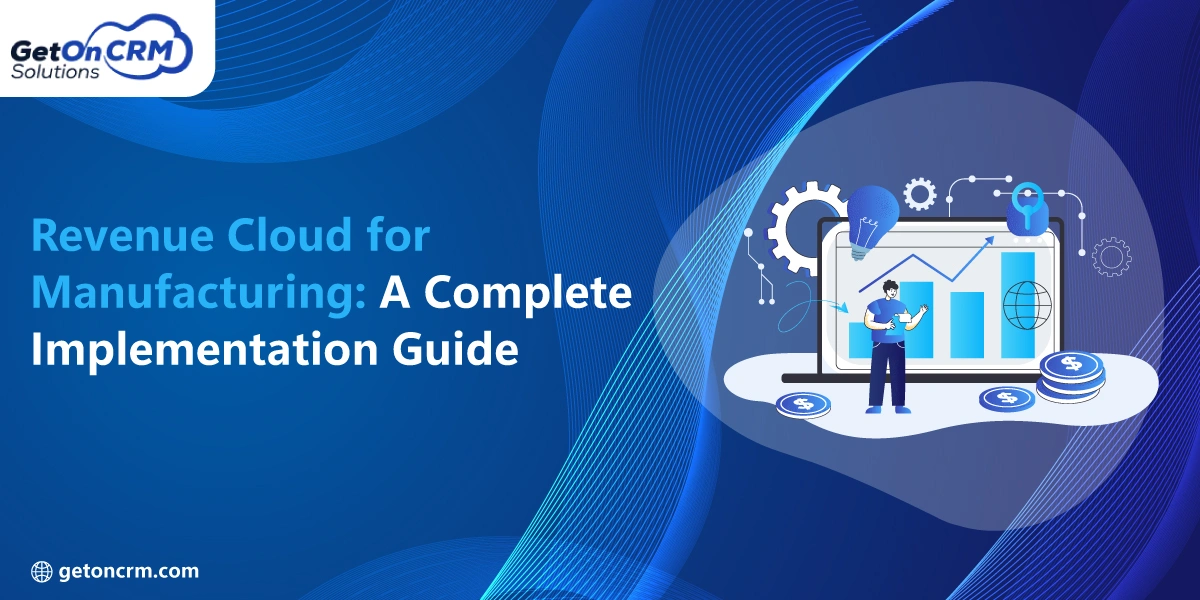
The current manufacturing businesses have been forced to undertake pricing, customer demands, contracts, and recurring revenues at a rate never witnessed before. Most companies have an issue of systems being out of sync, delays in quotes, and errors in pricing that translate directly to profits. It is upon this that the Agentforce revenue cloud turns out to be a significant solution to contemporary manufacturers.
With manufacturing constantly changing, towards automation and digitization, firms require more intelligent tools to manage complex revenue processes. Old systems do not typically feature flexibility in pricing, subscription billing, and real-time customer data. Another problem that businesses encounter is the inability to keep the correct quote, administer contracts, and monitor the sources of revenue over multiple channels.
Revenue cloud solutions for manufacturing help enterprises improve operational efficiency and enhance sales process automation, leading to a 25% increase in overall revenue. These solutions also enable more accurate forecasting, driving better decision-making.
Revenue Cloud is intended to streamline the whole quote-to-cash process. It enables businesses to better manage revenue and work at scale in competitive markets by connecting sales, finance, and operations teams to one platform.
What is Revenue Cloud?
✦ Definition and Core Concept
Revenue Cloud is a new business platform that helps companies manage pricing, quoting, billing, subscriptions, contracts, and revenue recognition through a single connected system. It assists businesses in automating the entire lifecycle of revenue, as well as enhancing business visibility.
In manufacturing organizations, Revenue Cloud becomes essential in minimizing complexities and enhancing sales effectiveness. It allows businesses to process custom product setups, dynamic pricing setups, and long-term customer contracts without doing it manually.
In the modern day, business organizations are made up of numerous companies that are dependent on sophisticated cloud computing to manufacture their own products to facilitate workflow and ensure the realization of the digital transformation agenda. A Salesforce revenue optimization partner can assist businesses faster and more precisely when it comes to sales cycles with the help of enhancing collaboration in the department or the business.
✦ Role in Modern Business Ecosystems
The manufacturers tend to operate under big product catalogs, several price models, and global customer networks. Using Revenue Cloud, the sales, marketing, customer service, and operations teams will be able to work together better.
Revenue Cloud for manufacturing providers is also used by modern manufacturers to integrate revenue systems with ERP platforms, CRM tools, and analytics software. This generates a networked ecosystem that enhances better business decision-making and customer interaction.
✦ Key Components of Revenue Cloud
⇒ CPQ (Configure, Price, Quote)
CPQ assists sales personnel in creating and setting prices on products, creating precise quotations in a relatively brief time frame. It minimizes mistakes and decreases the sales cycle.
Any manufacturer with custom products is at an advantage with CPQ, as complex configurations and pricing rules are simplified.
⇒ Billing & Subscription Management
A large number of manufacturers currently sell subscription-based services, maintenance plans, and recurring billing models. Revenue Cloud enforces the invoicing, subscription control, and management to enhance the accuracy of the invoicing process.
⇒ Revenue Recognition
Revenue recognition tools aid enterprises in sticking to financial requirements and keeping the revenue under contracts and billing schedules.
⇒ Contract Lifecycle Management
Contract management features assist businesses with the creation, approval, storage, and renewal of contracts efficiently. This enhances visibility and lessens delays in deal processing.
Why Manufacturing Companies Need Revenue Cloud
The companies engaged in manufacturing are under increasing pressure to handle the complex products, ever-changing customer demands, and various revenue streams in an efficient manner. Conventional systems tend to generate delays, pricing errors, and disjointed workflows, which impact labor productivity and profitability. Revenue Cloud assists manufacturers in automating revenue operations, enhancing pricing accuracy, and simplifying the entire quote-to-cash process.
✦ Industry Challenges
⇒ Complex Product Configurations
Hand-tailored products, frequently having a variety of settings, pricing frameworks, warranties, and assistance choices, are often sold by manufacturers. These combinations can be slowed down by the sales process, and there is a higher probability of error using manual methods to manage these combinations.
Here, Agentforce revenue management comes into play. It assists manufacturers in automating product configuration, price calculations, and the generation of quotes. Automated workflows enhance accuracy, minimize manual handling, and assist the sales teams in responding faster to customers.
⇒ Manual Pricing Errors
A large number of manufacturing companies continue to use spreadsheets and manual price determination techniques. This may result in uneven price cuts, miscalculations, delays in approval, and revenue losses.
Revenue Cloud assists a business in automating the pricing rules and maintaining the same pricing across products, regions, and customer accounts. This enhances profit margins and minimizes the errors that are attributable to pricing.
⇒ Disconnected Sales and Finance Systems
More frequently, sales, finance, billing, and operations are done using distinct systems by manufacturers. These systems lack connectivity, which leads to gaps in communication, duplication of information, and inaccurate reporting.
The providers of modern revenue cloud for manufacturing aim to assist businesses in making their ERP, CRM, and revenue management systems all integrated into a single connected platform. This enhances automation of workflow, visibility of data, and performance of operations effectively across departments.
✦ Key Benefits
⇒ Streamlined Quote-to-Cash Process
Revenue Cloud is a type of software that supports the entire quote-to-cash process, including product configuration and pricing, billing, and revenue management. Saving time on hard work and making the business run more smoothly.
⇒ Improved Pricing Accuracy
Advanced pricing engines enforce pricing rules, discounts, approval processes, and workflows automatically. This reduces human errors and makes the prices common-sense prices throughout the sales channels.
⇒ Faster Deal Closures
The automation of the workflow enables sales teams to create correct quotes within a relatively short amount of time, which helps businesses to react faster to the demands that customers make and close deals more effectively.
⇒ Enhanced Customer Experience
The customers get quicker approvals, correct pricing, and easier billing experiences. This enhances customer satisfaction, confidence, and long-term customer relationships.
Manufacturers that apply the Agentforce revenue management tools can also achieve greater control of revenue operations, enhance the accuracy of the forecasts, and improve the overall business performance.
Also Read: List of Salesforce Revenue Cloud Integration Services to Streamline Revenue Operations
Key Features of Revenue Cloud for Manufacturing
Revenue Cloud assists manufacturing companies in automating their pricing, product configuration, billing, and revenue operations. For better speed, accuracy, and customer satisfaction, it makes the complicated sales processes easier to understand.
✦ Automated Product Configuration
Most of the manufacturers have big product catalogs that have their various configurations, price plans, and service plans. Handling them manually may risk adding to the amount of error, as well as making sales processes slower.
Revenue Cloud automates product selection and configuration with predetermined business rules. This assists sales teams in making correct quotes more quickly and eliminating manual administration.
It is among the biggest reasons why businesses invest in Agentforce for revenue cloud solutions in order to enhance the efficiency of operations and accuracy of prices.
✦ Dynamic Pricing Models
Various pricing strategies have frequently been employed by manufacturing companies depending on customer contracts, order quantity, regional, and product bundling.
⇒ Revenue Cloud assists dynamic pricing models that can assist businesses:
• Use automated pricing regulations.
• Properly handle discounts.
• Maintain pricing consistency.
• Modify prices according to the market.
This assists manufacturers in remaining competitive as profit margins are safeguarded.
✦ Subscription and Recurring Billing
A large number of manufacturers currently make subscription-based services, including warranty, maintenance schedule services, and support contracts. Revenue Cloud facilitates recurring billing and managing subscriptions, helping businesses automate invoicing and manage long-term customer contracts more effectively.
✦ Real-Time Analytics and Reporting
⇒ Revenue Cloud offers live dashboards and reporting software that assist companies in tracking:
• Sales performance
• Revenue growth
• Pricing trends
• Customer activity
• Billing operations
The insights promote quicker decision-making and improved business planning.
✦ Integration with ERP and CRM Systems
These days, manufacturing companies have combined systems that keep the business running smoothly. Revenue Cloud is an ERP system, CRM system, and third-party application integrator to enhance workflow automation and data visibility.
There are numerous enterprises that collaborate with reputed Salesforce manufacturing cloud service providers to be integrated successfully and scaled in the long term.
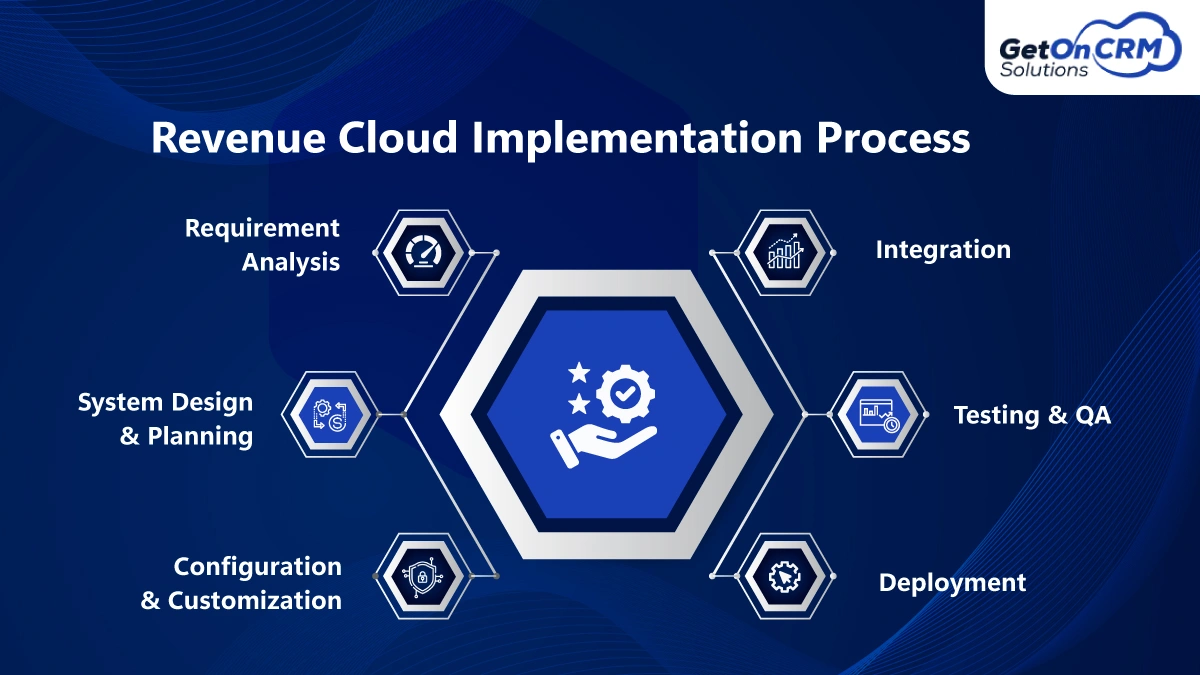
Revenue Cloud Implementation Process
Implementing Revenue Cloud in manufacturing calls on careful planning, integration of systems, and complete team collaboration. Such an organized implementation strategy assists companies in minimizing operations, enhancing prices, and making revenue operations more organized.
✦ Requirement Analysis
The initial action that leads to the implementation of Revenue Cloud is the awareness of the current revenue processes, operational challenges experienced by the company, and the business objectives. Enterprises must consider their pricing infrastructure, billing cycles, contract management process, and even reporting before setting out on the application.
⇒ Key Activities:
• Examine existing quotes to cash processes.
• Determine the existence of gaps and find inefficiencies.
• Re-evaluate the pricing scheme and billing processes.
• Know about the need to scale in the future.
✦ Stakeholder Alignment
⇒ Implementation of Revenue Cloud involves coordination of various departments, including:
• Sales teams
• Finance departments
• IT teams
• Operations managers
• Business leadership
Effective stakeholder engagement enhances communication, decision-making, and project success.
✦ Defining Goals and KPIs
To monitor the success of the implemented processes, businesses should set specific measurable objectives to be measured after a specific period of time, e.g.
• Less time taken to generate quotes.
• Improved pricing accuracy
• Faster billing cycles
• Better revenue visibility
• Improved customer experience
Other companies that depend on cloud computing for their manufacturing business will put emphasis on the automation and efficiency of their production at this stage.
✦ System Design & Planning
A well-designed system guarantees scalability, security, and easy integration between systems. Businesses should develop a transparent architecture plan that assists them in their present business operations, as well as in future business developments.
⇒ Architecture Design
🠺 A good architecture assists manufacturers in:
• Improve system performance
• Accommodate high-volume transactions
• Ensure data security
• Simplify future upgrades
• Data Flow Mapping
Businesses need to specify the flow of information between systems, including:
⇒ CRM platforms
• ERP software
• Finance systems
• Customer portals
• Revenue Cloud applications
Effective data flow mapping enhances the accuracy of reporting and decreases the distribution of these records.
⇒ Selecting Tools and Platforms
One of the keys to success in the long term is the choice of the appropriate implementation tools. Numerous companies collaborate with the established Salesforce manufacturing cloud service providers to minimize deployment risks and optimize integration of the systems.
✦ Configuration & Customization
Revenue Cloud enables manufacturers to design workflows, prices, and approvals in accordance with company demands.
⇒ Setting up CPQ Rules
🠺 CPQ (Configure, Price, Quote) guidelines can assist businesses to:
• Configure products automatically
• Generate accurate quotes
• Apply pricing logic
• Reduce manual errors
The products of manufacturers with very high customization are highly benefited by automated CPQ workflows.
⇒ Custom Workflows
• Pricing updates
• Contract renewals
• Order processing
• Billing approvals
Automation minimizes the human factor and enhances efficiency in its operations.
⇒ Pricing and Discount Structures
Revenue Cloud offers high-order pricing schemes and acceptance levels. Companies using Agentforce for revenue cloud solutions tend to tailor the pricing models according to:
• Product categories
• Customer agreements
• Regional pricing
• Volume discounts
✦ Integration
One of the most significant sections of Salesforce revenue optimization partners is system integration. Interrelated systems enhance visibility of operations and minimize communication barriers across the departments.
⇒ ERP Integration
🠺 ERP integration helps synchronize:
• Financial data
• Inventory information
• Procurement workflows
• Operational records
This will make sure that all the departments will be working with updated and correct information.
⇒ CRM Synchronization
🠺 CRM synchronization aids in the ability of the sales teams to have access to:
• Customer histories
• Transaction records
• Contracts
• Pricing details
This enhances sales efficiency and management of customer relationships.
⇒ Third-Party Tools Connection
🠺 Some additional components can be integrated by businesses:
• Analytics platforms
• Payment gateways
• Customer portals
• Reporting tools
The contemporary cloud solutions for manufacturing are based on interconnected systems that enhance the automation and scaling components of cloud computing technologies.
✦ Testing & QA
Businesses should carry out an in-depth test of the system before its deployment to make sure the operations and performance run smoothly.
⇒ Functional Testing
• Rules on pricing are functioning appropriately.
• Billing systems are running effectively.
• Workflows run smoothly.
• Product configurations are correct.
⇒ User Acceptance Testing (UAT)
UAT is important to make sure that the platform can service any real-life business processes and user needs. Employees in various departments tend to put workflow through trial and error before it can be officially accepted.
⇒ Performance Testing
• System bottlenecks
• Slow response times
• Scalability issues
• Integration failures
This step is taken to ensure that the platform is able to manage large transaction volumes in an efficient manner.
✦ Deployment
The last phase shall be to roll out the system, migrate data, and keep track of performance upon implementation.
⇒ Go-Live Strategy
🠺 By means of staged go-live, it can assist the business to:
• Reduce operational risks
• Minimize business disruption
• Resolve issues gradually
• Improve transition management
⇒ Data Migration
🠺 Businesses should ensure a close migration:
• Customer records
• Product catalogs
• Pricing information
• Contracts
• Billing data
Migration often requires data validation and cleansing so that people are certain of the accuracy of their data.
⇒ Monitoring and Support
🠺 The post-deployment assistance benefits the business:
• Detect problems in the system at the earlier stages
• Optimize workflows
• Improve user adoption
• Maintain system performance
Organizations that operate agentforce revenue management systems should also develop long-term optimization and support plans that will help their business to maximize its business value.
Best Practices for Successful Implementation
An effective implementation of a Revenue Cloud involves adequate planning, clean data, and solid collaboration among teams. Basing its strategies on the right path may help manufacturing businesses sustain fewer deployment risks and enhance the long-term system lifespan.
✦ Start with Clear Business Objectives
It is important for companies to know what they want to achieve before they start working toward their goals. This can take the form of ensuring that prices are more accurate, automation of billing, lessening the time it takes to get a quote, or increased visibility of revenue.
Good planning assists the teams in keeping track of one another within the project. Manufacturers can also use the Agentforce revenue management solutions to increase the amount of control they can exert and gain better control over the entire forecasting process.
✦ Keep Data Clean and Standardized
Data must be clean and accurate, and it must be smooth to implement. Redundant information, expired records, and inappropriate formats may cause a hiccup during deployment.
⇒ Businesses should:
• Validate existing data
• Remove duplicate records
• Standard customer information and pricing.
• Limitlessly refresh the system data.
• Involve Cross-Functional Teams
The implementation of the Revenue Cloud needs the cooperation between the sales, finance, IT, operations, and customer service teams. An early involvement of the departments can foster communication and minimize the problems related to the implementation.
Cross-functional teams are also useful to businesses in that they facilitate working processes that serve actual business activities.
Also Read: Salesforce Revenue Cloud Cost: Complete Pricing Guide for Businesses
✦ Prioritize User Training and Adoption
The deployment should be accompanied by proper training of the employees before and after deployment. It might be hard for people who haven’t been trained to get used to the new method and the new ways of doing things.
⇒ Businesses should provide:
• Training sessions
• Workshops
• User guides
• Ongoing technical support
This assists in enhancing user adoption and making it less resistant to change.
✦ Use the Phased Implementation Approach
The step-by-step implementation strategy enables firms to roll out the functionality only in phases, as opposed to releasing it wholesale. This assists in limiting the operational risks and provides the various teams with the opportunity to get to the root of the problems at any one stage.
Numerous firms incorporating Agentforce revenue management solutions have higher implementation outcomes through the step-by-step implementation of features.
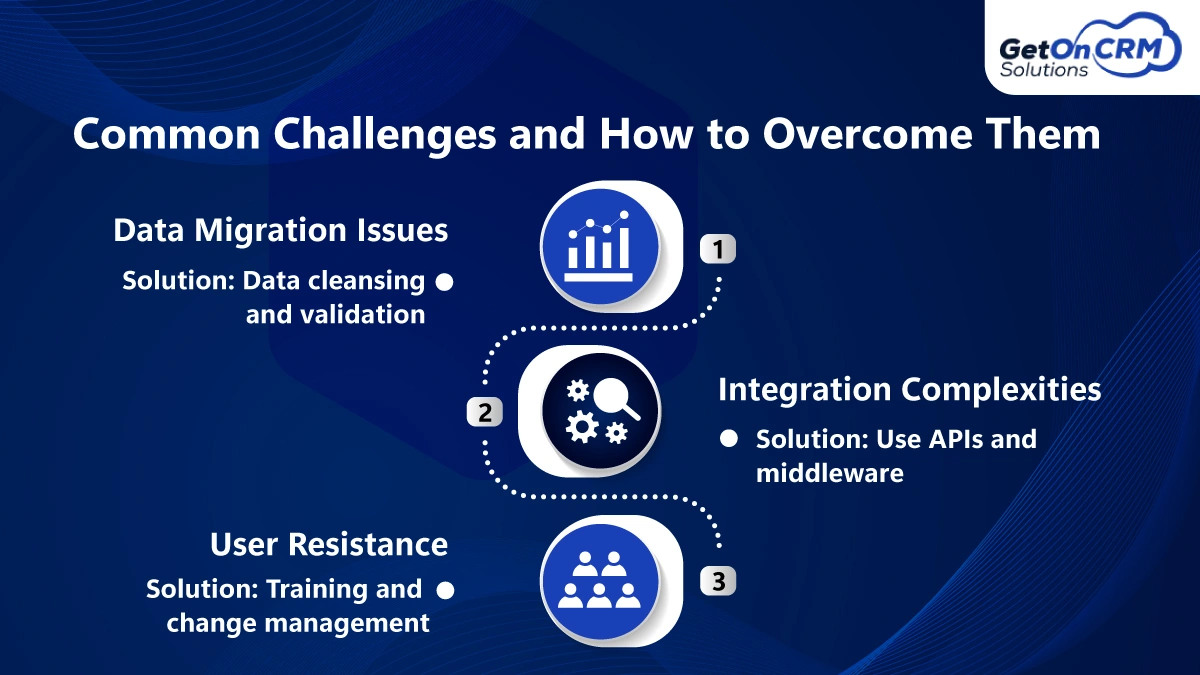
Common Challenges and How to Overcome Them
The adoption of Revenue Cloud in manufacturing may present a challenge if businesses are not adequately prepared. Problems of data, integration of systems, and user adoption are typical in the implementation.
✦ Data Migration Issues
Movement of huge amounts of customer, pricing, product, and contract information out of old systems may introduce errors and inconsistencies. Unfinished or declared records can also have an impact on the system performance once it has been deployed.
⇒ Solution: Data Cleansing and Validation
🠺 Businesses should:
• Remove duplicate records
• Validate existing data
• Standardize formats
• Tested the migrated data prior to deployment
This assists in minimizing mistakes in implementation.
✦ Integration Complexities
Manufacturers tend to implement various systems like ERP, CRM, finance, and inventory software. It may be hard to connect these systems with Revenue Cloud if these platforms are unconnected or are not up-to-date.
⇒ Solution: Use APIs and Middleware
Middleware and APIs enable linking ERP systems, CRM platforms, and Revenue Cloud applications to work more effectively. Collaborating with more advanced Salesforce manufacturing cloud service providers can also aid businesses in managing integration challenges more effectively.
✦ User Resistance
Other reasons include work against new systems due to unknown workflow or due to the inability to realize the ideas. This may delay its implementation and influence the uptake of the system.
⇒ Solution: Training and Change Management
🠺 Businesses should provide:
• Employee training sessions
• Onboarding and workshops.
• Ongoing technical support.
• Effective communication through deployment.
The companies that use the Agentforce revenue management solutions are expected to pay attention to user engagement and training during the implementation process.
Future Trends in Revenue Cloud for Manufacturing
Companies that manufacture are quickly embracing advanced technologies to enhance revenue activities, customer experience, and business efficiency. Revenue Cloud is in the process of growing with automation, artificial intelligence, and connected cloud environments that facilitate the modern manufacturing requirements.
✦ AI-Driven Pricing Optimization
AI is changing the other types of manufacturing pricing processes by assisting companies in analyzing customer behavior, market tendencies, and customer buying patterns in real time. Automatic recommendation of optimized pricing depending on demand, customer segments, and sales performance is possible using AI-powered systems.
Advanced agentforce revenue cloud technologies are assisting manufacturers in developing smarter pricing tools and enhancing pricing accuracy and efficiency in operation.
✦ Predictive Analytics
Predictive analytics assists manufacturers in more accurately predicting customer demand, buying behavior, and future revenue trends. Real-time insights can help businesses to better plan, manage stocks, and forecast sales.
Predictive tool manufacturers would be more capable of making quicker business decisions and reacting to varying market conditions in a more responsive manner.
✦ Automation in Revenue Operations
Modern revenue management is taking a huge interest in automation. Manual work and delays in operation are some of the processes that have been automated through the automation of quoting, billing, approvals, renewals, and contract management processes by businesses.
The current cloud solutions for manufacturing systems are created to enable end-to-end automation, in addition to enhancing workflow efficiency in each department.
✦ Cloud-Native Manufacturing Ecosystems
Manufacturing businesses are progressing to fully connected cloud environments that enhance teamwork, scalability, and data accessibility. Cloud-native platforms enable businesses to integrate sales, finance, operations, and customer management systems to operate within a single environment.
Companies that implement Agentforce for revenue cloud solutions are more equipped to deal with digital transformation and match the changing customer expectations.
Ready to Implement Revenue Cloud for Manufacturing the Right Way?
Revenue Cloud has become a vital tool to be used by manufacturers who aim at ensuring better efficiency in their operations, automating their revenue processes, and improving customer experiences. CPQ, billing automation, and contract management and analytics are just some of the ways that Revenue Cloud can help businesses streamline complex processes and foster long-term growth.
By investing in Salesforce revenue optimization partner strategies may help improve accuracy in pricing and reduce manual error, and create faster sales cycles. An effective implementation plan, in combination with clean data, integration of systems, and training of employees, will greatly enhance the level of deployment success.
Companies that are willing to accept automation as well as modern technologies in revenue management are better placed to remain competitive within the changing markets. The experienced Salesforce revenue optimization provider experts can assist businesses in maximizing the worth of Revenue Cloud investments and help the organization attain sustainable growth.
With the continued digital transformation in the manufacturing industry, organizations adopting intelligent revenue systems will gain greater operational control, enhanced customer satisfaction, and increased profitability. Future-looking businesses that seek scalable cloud solutions for manufacturing must focus on automation strategies, integration strategies, and long-term strategies to maximize revenues to stay successful in the future.