
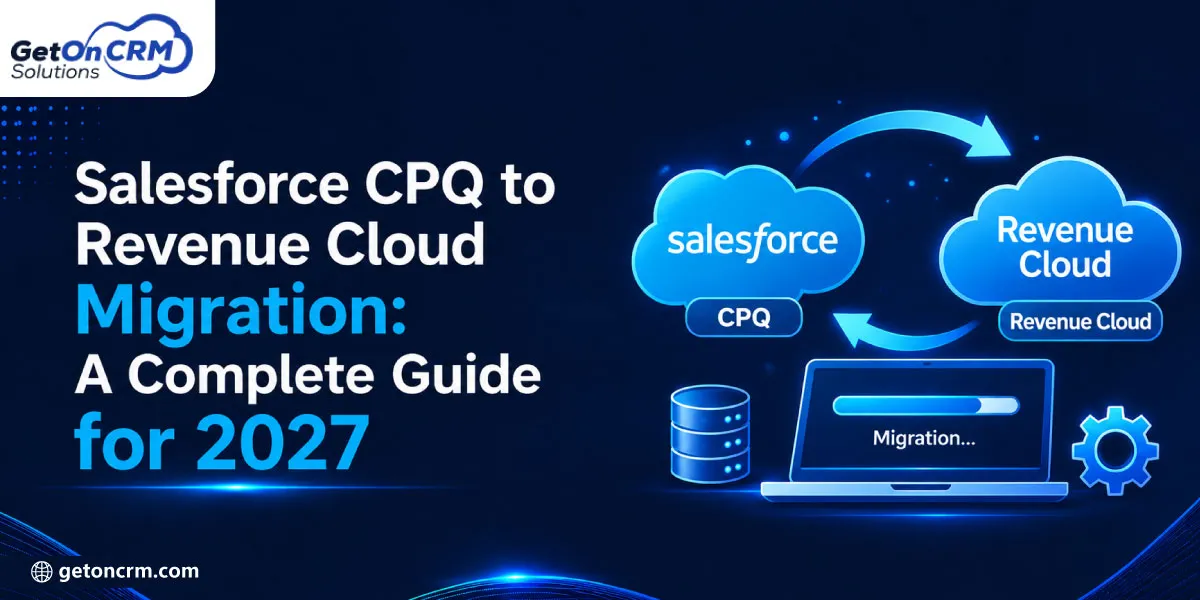
Managing quote-to-cash workflows can become complicated as your business grows. Complex quotes, pricing rules and approval processes are managed by many organizations with Salesforce CPQ. But as customer needs evolve and new business models take shape, there’s a need for more flexible billing, consolidated data and AI-backed automation. That’s why businesses are increasingly migrating to Salesforce Revenue Cloud in 2027.
CPQ to Revenue Cloud can help unify sales, finance, and operations on a single platform. Choosing one of the best Salesforce CPQ consulting providers can help companies minimize risks and streamline the migration process.
According to Salesforce’s 2026 State of Sales Report, sales representatives spend 17% of their working time creating quotes. This highlights the need for businesses to streamline quoting workflows and reduce manual effort.
What Is Salesforce CPQ to Revenue Cloud Migration?
Salesforce CPQ (Configure, Price, Quote) is a tool that allows sales teams to create accurate quotes for complex products and services. As the business grows, it should be able to tie quoting to order fulfillment, invoicing, and revenue recognition over time.
Salesforce Revenue Cloud integrates CPQ with order management, billing and partner portal. It connects sales and finance processes in a seamless workflow.
The migration from CPQ to Revenue Cloud includes transferring data, rules and configurations from the old platform architecture to the new one. Salesforce CPQ to revenue cloud migration streamlines product catalogs, updates custom code, and enhances the overall flow of salesforce CPQ to revenue cloud. With the help of specialized salesforce CPQ consulting services, this approach can be streamlined without disrupting the daily business.
Salesforce CPQ vs Revenue Cloud: Key Differences
➛ Platform Architecture : Salesforce CPQ is a managed package add-on and Revenue Cloud leverages the Salesforce platform architecture.
➛ Product & Pricing Configuration : CPQ supports product bundles, block/tier pricing, while Revenue Cloud is for complex multi-attribute products & dynamic pricing.
➛ Quote-to-Cash Automation : CPQ works primarily on creating quotes and generating contracts, whereas Revenue Cloud works on the entire billing order and revenue workflow.
➛ Subscription & Usage Models : CPQ provides some support for complex usage pricing, while Revenue Cloud supports usage-based and subscription and hybrid pricing models.
➛ Order Management & Billing : CPQ can be a bit clunky and may need external add-ons or custom integrations, while Revenue Cloud has built-in Order Management and Invoicing capabilities.
➛ AI Capabilities & Scalability : With CPQ, you can get standard automation and reporting, and with Revenue Cloud, you can get AI-driven pricing, approvals, and revenue insights.
➛ Integration & Customization : CPQ heavily depends on custom Apex code and scripts, while Revenue Cloud provides scalable architecture and low-code customization options.
Also Read : Complete Salesforce CPQ to Revenue Cloud Migration Checklist
Why Should Businesses Migrate from Salesforce CPQ to Revenue Cloud in 2027?
➤ Modernise Quote-to-Cash Operations
Traditional CPQ systems are typically based on manual processes and handoffs between the sales and finance team. Salesforce CPQ migration to revenue cloud streamlines the billing process, order entry, and invoice generation, eliminating manual delays and minimizing the risk of errors.
➤ Support Complex Revenue Models
Today’s buyers are seeking flexibility in buying. Revenue Cloud enables companies to offer subscription pricing, consumption-based pricing, and keep contracts recurring without any complicated workarounds.
➤ Improve Sales Efficiency
The faster product configurations and the approval procedure is streamlined, the sooner sales teams can close. A certified salesforce CPQ consultant will make sure that your team creates clear workflows. Salesforce CPQ consulting services enable salespeople to do more selling and less quoting.
➤ Prepare for AI-Driven Revenue Operations
By leveraging cutting-edge AI, Revenue Cloud assists sales teams in identifying the proper products, making discount suggestions, and automating repetitive pricing inspections. By leveraging agentforce revenue management services, businesses can automate processes and have a clear understanding of revenue streams.
➤ Reduce Long-Term Technical Complexity
With older CPQ environments, there are often issues of custom code bloating, slow price rule calculations, and expensive maintenance. When it comes to a salesforce CPQ to revenue cloud migration service, businesses can replace the old code with the platform’s built-in features.
When Should You Consider Salesforce CPQ Migration?
When customizations and pricing rules in the old system are getting difficult to maintain, Salesforce CPQ migration must be considered. Sales productivity can also be impacted by complex product logic, which can slow down quote generation.
If your current system doesn’t offer enough flexibility when it comes to usage-based or recurring pricing, then upgrading to Revenue Cloud might offer the flexibility you need. Likewise, there could be workflow issues between the CRM, ERP, and billing systems, causing reporting inaccuracies and inconsistencies.
Companies that are growing quickly may require a more scalable revenue management system that can support their expanding needs.
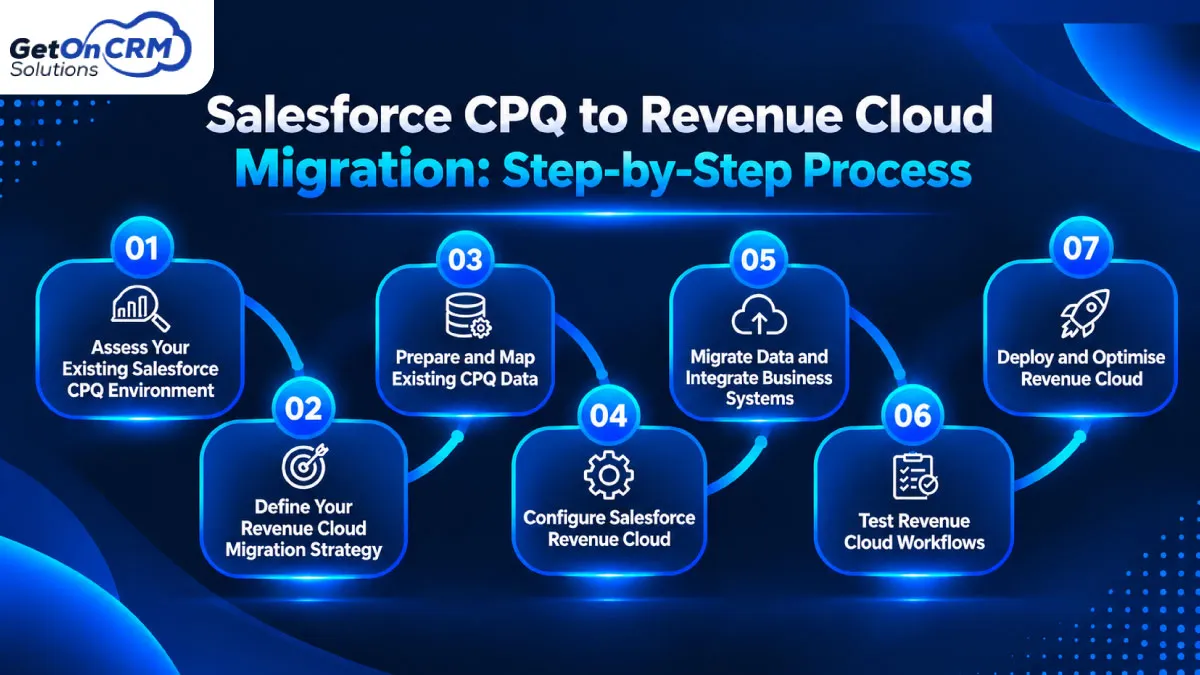
Salesforce CPQ to Revenue Cloud Migration: Step-by-Step Process
Step 1 – Assess Your Existing Salesforce CPQ Environment
Review the existing data, which includes product catalogs, price rules, workflows and custom objects. Find custom code which can be replaced by using native features.
Step 2 – Define Your Revenue Cloud Migration Strategy
Establish project objectives, schedules and costs. Determine how you want to implement the change to your operations—phased rollout or direct cutover. Working with a knowledgeable salesforce revenue optimization partner can help clarify these timelines. Hiring agentforce revenue management services early means you set your automation goals without them going astray.
Step 3 – Prepare and Map Existing CPQ Data
Remove unused product lists, duplicate accounts, and old data from the system prior to moving data. Match existing CPQ data model to Revenue Cloud’s data schema to maintain historical data for contracts and transactions.
Step 4 – Configure Salesforce Revenue Cloud
Create product catalog, dynamic pricing, approval rules, billing schedules. By using an agentforce revenue management solution, your team can safely automate quote processing and billing flows.
Step 5 – Migrate Data and Integrate Business Systems
Move active contracts, subscriptions and accounts into Revenue Cloud. Integrate with your ERP, payment process and accounting software. For businesses with global deployments, salesforce CPQ implementation in India is a helpful tool to ensure a smooth and effective process.
Step 6 – Test Revenue Cloud Workflows
Execute complete testing in the quotes, orders and invoicing area. Do UAT (user acceptance testing) by sales, finance and operations teams to ensure pricing accuracy.
Step 7 – Deploy and Optimise Revenue Cloud
Base your cut over on off peak hours. Provide hands-on training to sales reps and finance administrators. Measure performance indicators continuously with your salesforce CPQ consultant and solve any small problems in a timely manner.
How Salesforce Revenue Cloud Improves Business Operations
Salesforce Revenue Cloud accelerates the quote-to-cash (Q2C) cycle and offers real-time visibility into contracts, renewals, and revenue. It helps the sales and finance team to work more effectively together because of the shared data on customers. It also allows for flexible pricing options, automates order and invoice procedures, minimizes manual mistakes, and provides a streamlined customer experience.
How to Measure Success After Salesforce Revenue Cloud Migration
❖ Quote-to-Cash Efficiency
Monitor the speed of sales team quote processing and approval. Also, determine if the overall sales cycle from lead creation to deal closed has shortened.
❖ Revenue Performance
Track accuracy and invoice adjustments, subscription renewals and add-on sales. A decrease in billing errors and increases in renewals point to better revenue management.
❖ Sales Team Productivity
Assess how automation has streamlined administrative processes for salespeople. If the managers can be approved more quickly, it means that the workflow is more efficient.
❖ System Performance and Adoption
Monitor usage of platforms throughout sales and finance. Monitor system stability and ERP integration performance to ensure smooth business operations.
❖ Business ROI
Determine the cost savings from the elimination of legacy tools, maintenance and improved workflow. Compare these savings with the investment in your salesforce CPQ to revenue cloud migration services to measure overall returns.
Also Read : List of Revenue Cloud Migration Services for Seamless Platform Upgrade
Best Practices for Successful Salesforce Revenue Cloud Migration
➛ Run a Readiness Assessment: Check your current system configuration for readiness before setting up the new system.
➛ Clean Up Your Catalogs: Remove out-of-date product SKUs, price books, and unused rules
➛ Adopt the Right Migration Approach: If your business has complex global business units, then consider a phased migration model.
➛ Prioritize Integration Testing: Test integrations between your CRM, Revenue Cloud and financial platforms early.
➛ Engage Trusted Experts: Partner with the best salesforce CPQ consulting services to design systems and transfer data.
How to Choose the Right Salesforce Revenue Cloud Migration Partner
Select an experienced partner who has expertise in Salesforce CPQ to revenue cloud migration services, data transformation, system integration and billing configuration.
Make sure that they know the current pricing and provide migration strategies with minimal downtime and support. Another option is salesforce CPQ implementation in India, which can be executed cost-effectively and project delivery is ensured.
Ready to Make Your Salesforce Revenue Cloud Migration a Success?
Moving from Salesforce CPQ to Salesforce Revenue Cloud in 2027 offers your business the ability to handle today’s pricing models, ensure more accurate billing, and increase sales productivity.
The key to a successful migration is preparation, clean data and clear strategy. A salesforce CPQ consultant or expert salesforce revenue optimization partner reduces risk and project execution issues. Partnering with the best salesforce CPQ consulting providers enables you to get the most value from your investment while maintaining a smooth quote-to-cash process.
Evaluate your organization’s readiness for migration now, to create a scalable revenue operation for the future.